
Sightseeing city
Historical walking tour
Mikaela Lodén from the Vaxholm Tourist Office shares stories about historical buildings and sites in central.
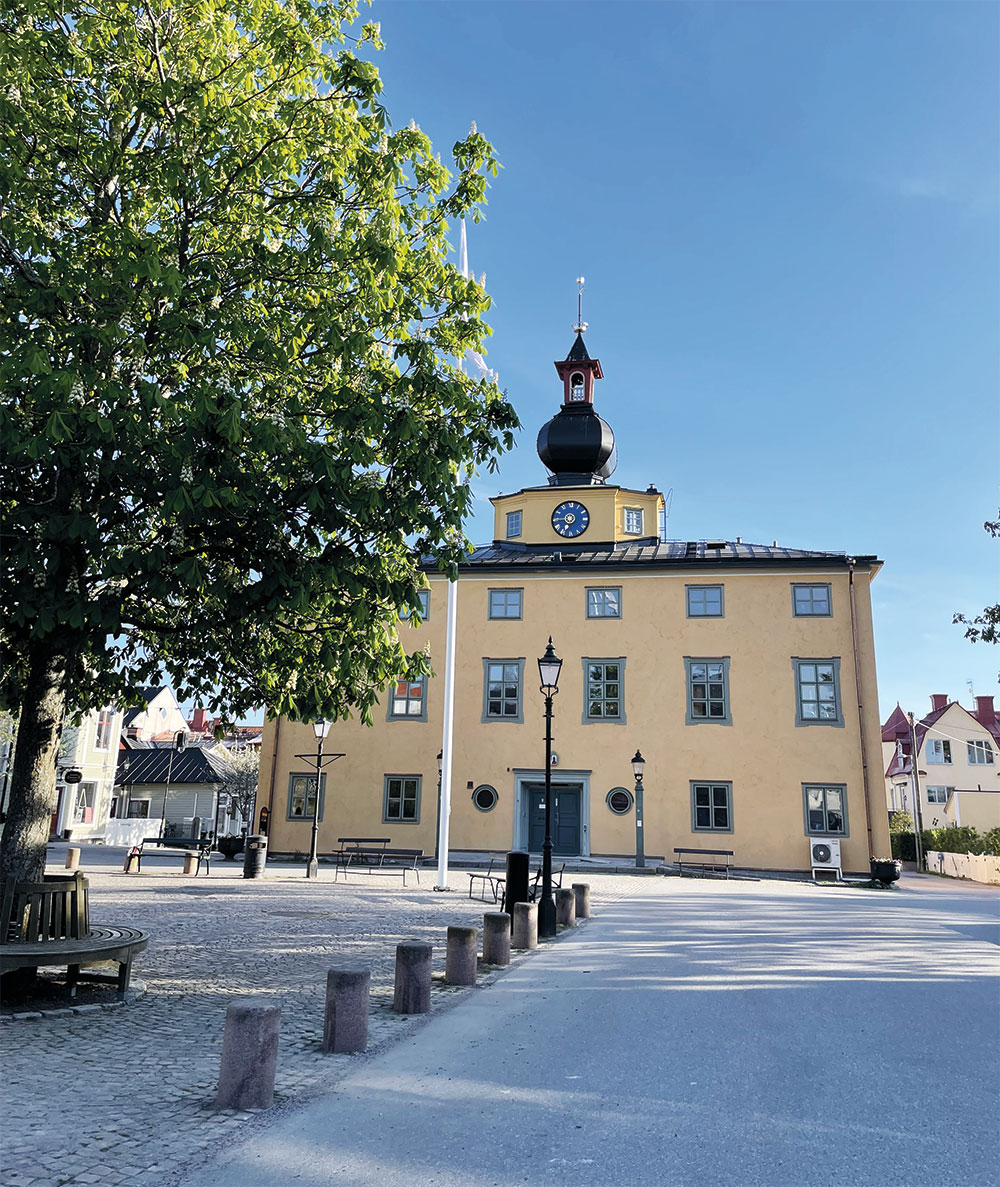
 THE TOWN HALL
A “rådhus” was traditionally the building where a city’s court convened. Only towns with their own judicial system had one. Vaxholm’s current Town Hall was inaugurated in 1926. Before that, a smaller building stood on the site, completed in 1885. The ground floor then housed the police station, a holding cell, the courtroom, and offices. The mayor and his family lived upstairs. At the time, Vaxholm had just over 1,500 inhabitants, and King Oscar II was on the throne. In 1925, architect Cyrillus Johansson was commissioned to expand the building. The old Town Hall received an extra floor and was widened by 2.5 meters on each gable. The council chamber was moved up one floor, and the mayor’s apartment was placed in the newly added top floor.
The local court was dissolved in 1948, and the police moved out in 1957. Vaxholm had a mayor until 1968. Today, the Town Hall houses the tourist office, offices for the quay development project, meeting spaces, and private offices.
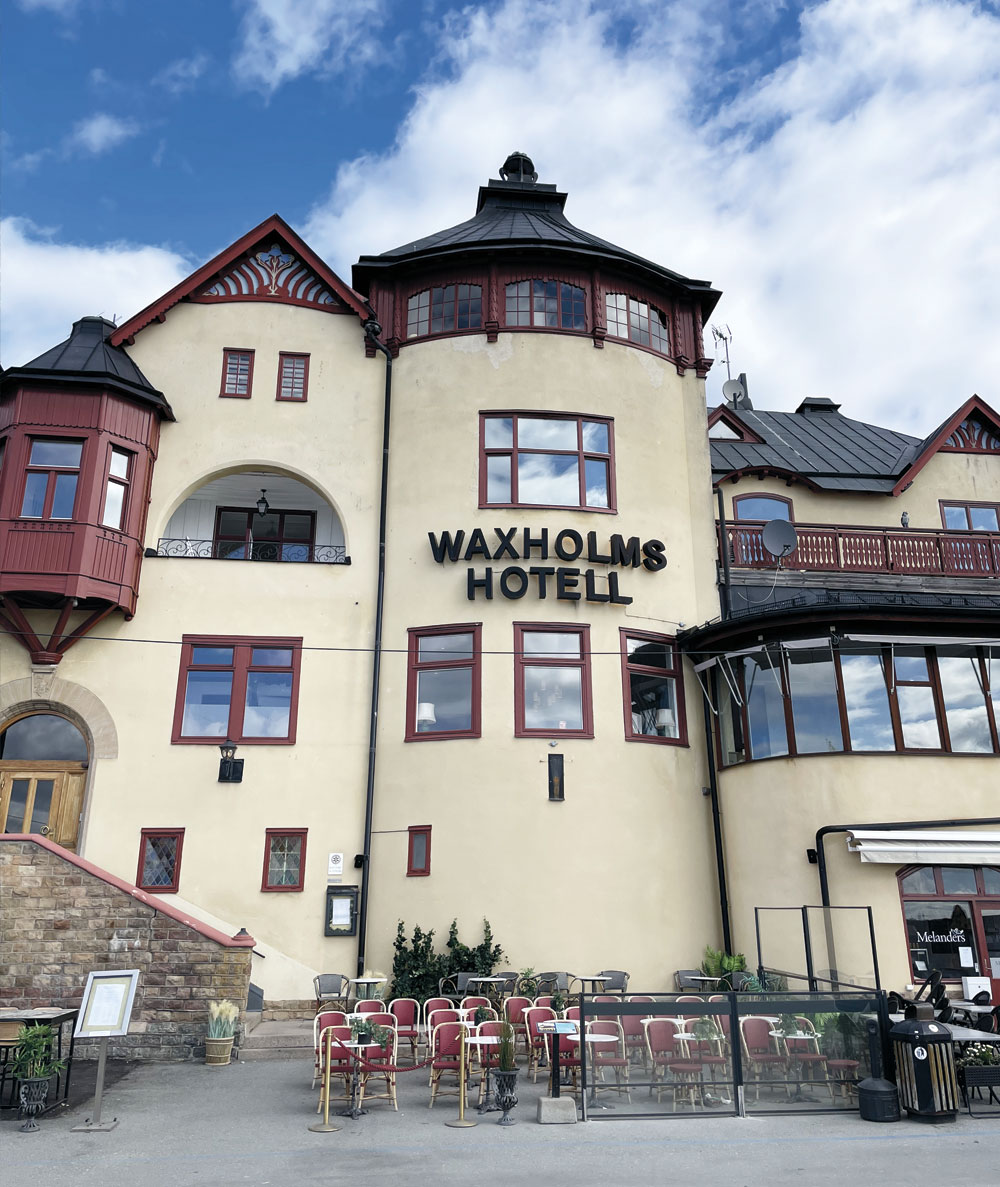
 WAXHOLM HOTEL
Today, Waxholms Hotell is the only hotel in Vaxholm, but the first hotel on this site was built in the the mid-19th century when summer tourism began. The original hotel was called Falks salonger, a wooden house run by the sisters Ulla and Carolina Falk. It was the finest restaurant in town, known for white tablecloths and an in-house pastry chef.
The fast steamship connections to Stockholm made it easy for guests to visit Vaxholm for dinner and return the same evening. Falks salonger burned down in 1899. The new Waxholm Hotel, designed in Art Nouveau style by architect Erik Lallerstedt, opened in 1902.
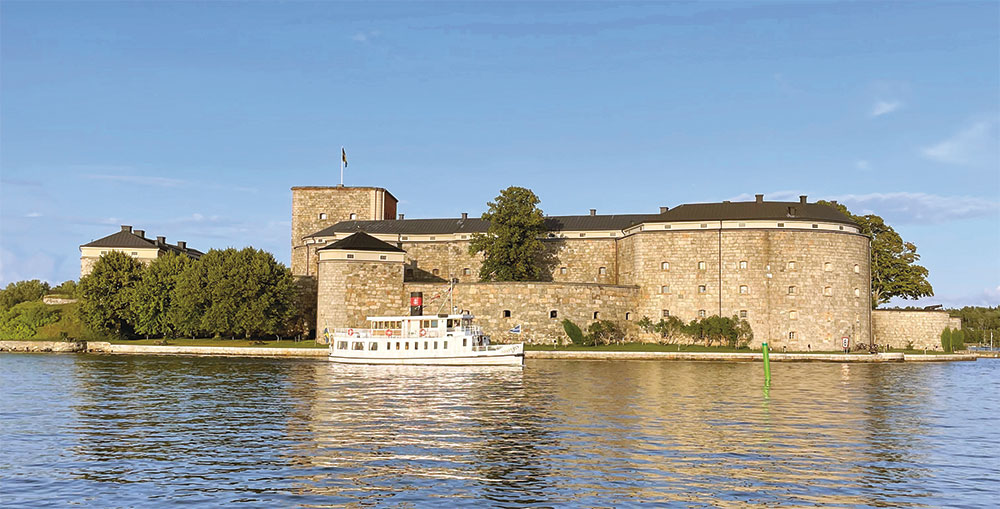
 VAXHOLM FORTRESS
The first fortress on the small island of Vaxholmen was begun in 1548 by King Gustav Vasa, who wanted a permanent defense to protect Stockholm. The fortress saved Sweden twice: in 1612, when a Danish fleet of 30 ships and 8,000 men was blocked here, and in 1719, when Russian forces tried to enter via Vaxholm but had to retreat.
In 1833, the old Vasa-era fortress was demolished, and the current one was built, a project that took 30 years. By the 1850s, weapons had become more powerful. In 1872, a test shot went straight through the 2.5-meter-thick walls.
The fortress has since served as a command post, training site, and housing. The military left in the 1940s, and today the fortress houses a conference center, a bistro, a Bed & Breakfast, the Fortress Museum, and more.
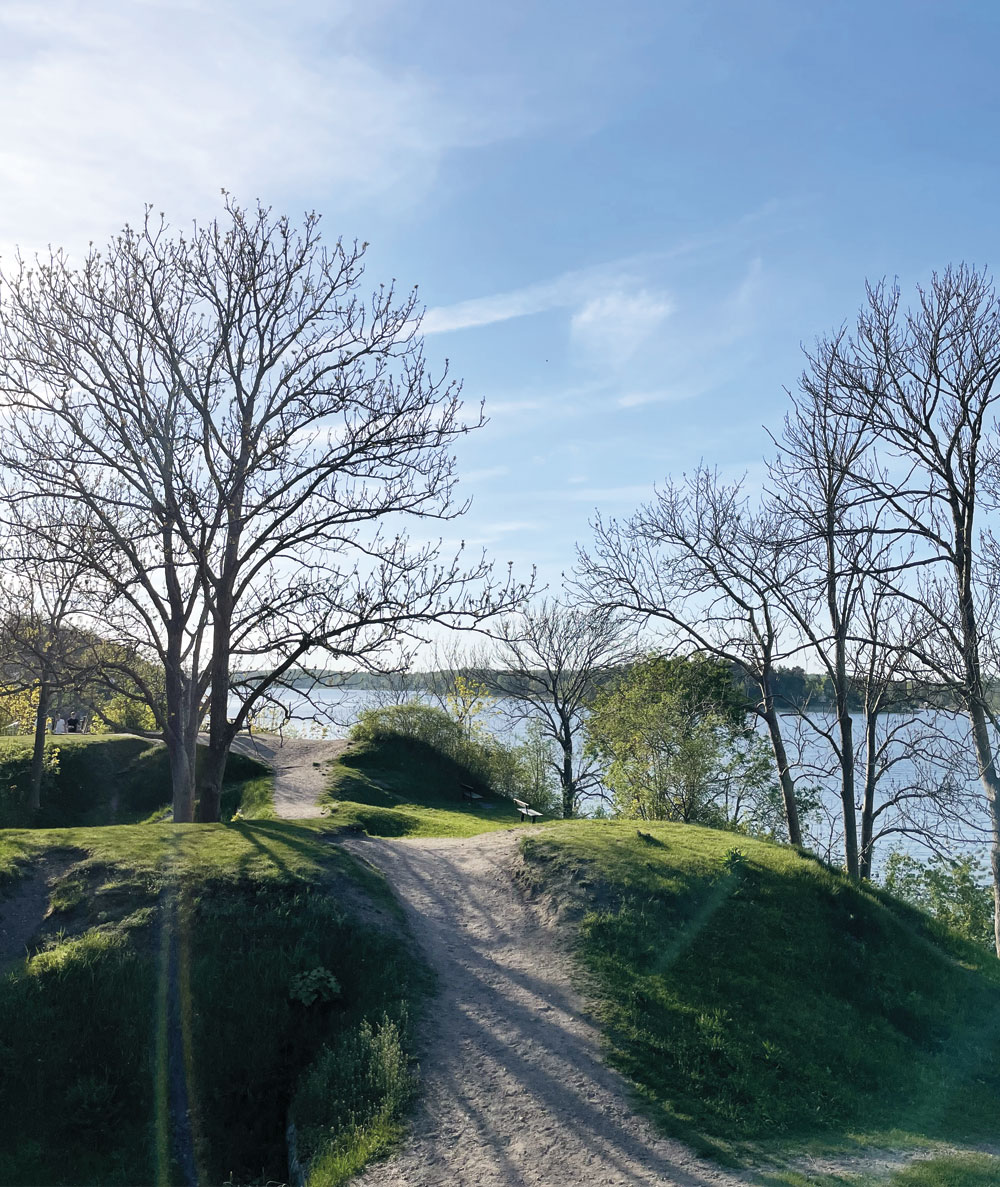
 THE BATTERY PARK
In the early 18th century, a cannon battery was constructed here to strengthen the defense of Stockholm. At the time, the king had blocked all other navigable routes, making this the only sailing passage into the capital. The battery originally had ten cannons made in 1676. In the early 19th century, these were replaced with 18-pound Portuguese cannons, giving the site the name “Portuguese Battery”. In the early 20th century, the site was upgraded with four 27 cm cannons that could fire far across the archipelago, even reaching Trälhavet. You can still see the cannon rails embedded in the ground today.
 NORRHAMNEN (NORTH HARBOUR)
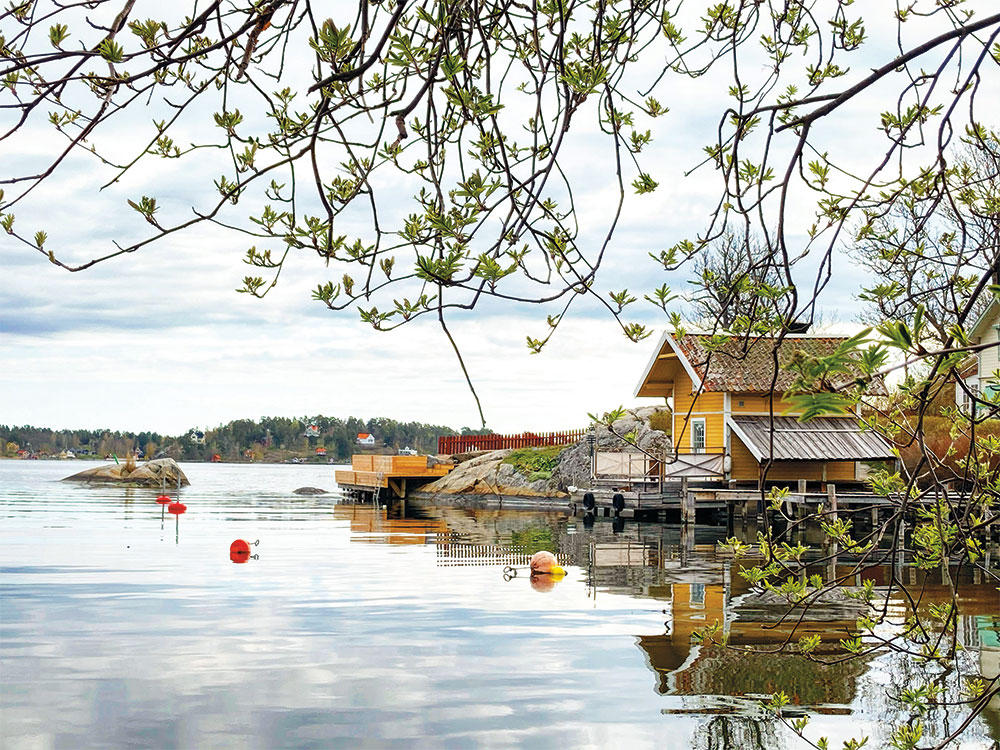
In the past, fishing boats crowded Norrhamnen, and drying racks lined the bay where nets were hung to dry. During the 19th century, Vaxholm had about 150 fishing families, mostly living in Norrhamnen, Västerhamnen and Västra Ekudden. Fishing, especially for Baltic herring (strömming), was the main livelihood. It was hard work, fishers left in the evening and often returned only by morning. Sometimes they rowed all the way to Sandhamn to haul in their catch. Fresh Vaxholm herring was highly sought after in Stockholm, as it was delivered unsalted and fresh each morning. It was usually the fishermen’s wives who rowed to the city and handled the sales at the market. Today, one side of the harbour features the Vaxholm Heritage Museum. During the summer, visitors can explore how a fishing family lived in the 19th century. Upstairs, there’s an exhibition where you can learn more about traditional herring fishing, including a fully equipped original fishing boat on display.




